Buildingthe bridgebetween breakthrough therapies and publicmental healthcare

Our purpose

The Psychedelic Mental Health Access Alliance is a multi-state initiative developing the care models, partnerships, and evidence needed to bring psychedelic-assisted therapy (PAT) into Medicaid and other public systems. Our focus is simple: ensuring that people who depend on publicly funded mental health care can benefit from PAT as they become available.

The moment

The science is here.
The moment is now.

For thousands of years, psychedelic medicines have been held with reverence, care, and responsibility within Indigenous and spiritual traditions that continue to steward these practices today. Long before clinical trials, communities around the world understood these medicines as tools for healing, insight, connection, and transformation.

Now, after decades of prohibition and a long pause in scientific inquiry, Western research is catching up. Hundreds of studies have begun to validate what many practitioners, healers, and communities have known through experience: when combined with skilled support, careful preparation, and integration, psychedelic-assisted therapies can help relieve profound forms of suffering and support lasting change.

We are living through a remarkable moment in the evolution of mental-health care. Long-held traditions, lived experience, and modern science are beginning to converge, creating new possibilities for how healing is understood, delivered, and sustained. The opportunity before us is not simply to advance new treatments, but to ensure the benefits of this emerging field can reach the people and communities who stand to benefit most.

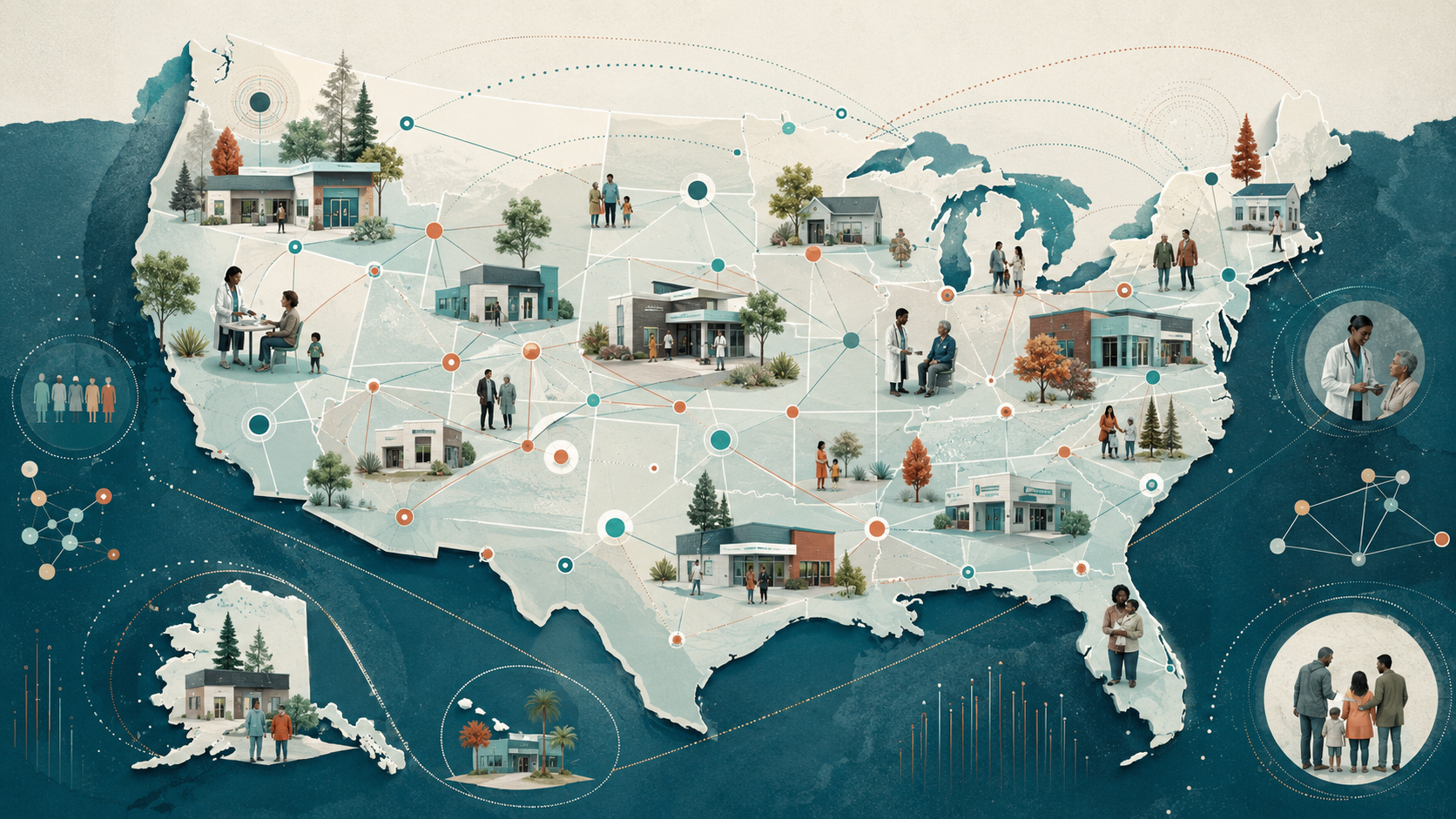
Illustrated map of the United States showing a connected network of community clinics, providers, and families across all regions
A national network in formation — community clinics, providers, and the people they serve, connected across states.
3
Applications under FDA review
Compass and Usona psilocybin and Transcend's methylone — decisions expected 2026.
Track drug development
3
State-regulated models
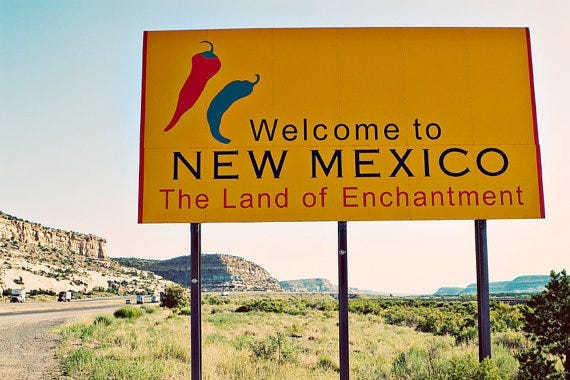
Oregon and Colorado operating; New Mexico — the nation's first medical psilocybin program — launches 2026. There are 25 and counting states engaged in legislation around psychedelic-assisted therapy and research.
Track legislation
100+
Clinical trials and studies
In the past decade there have been 100+ trials and studies on psychedelic science and psychedelic-assisted therapy — from psilocybin to MDMA to ketamine — for all types of conditions.
Track clinical trials
The gap inside the breakthrough

The field is advancing rapidly, yet much of today’s research, infrastructure, and access pathways remain concentrated in academic and private-pay environments. Far less attention has been devoted to understanding how psychedelic-assisted therapy can be effectively delivered within public health systems and adapted to the needs of the communities they serve. PMHA Alliance exists to close that gap — through community-informed pilot studies, implementation tools, and culturally and clinically aligned care models designed for Medicaid populations.

Why Medicaid — and why now

Approval creates possibility. Infrastructure creates access.

State Medicaid agencies are responsible for delivering healthcare to millions of people while managing workforce shortages, rising behavioral-health needs, budget pressures, and shifting federal and state priorities. In this environment, even promising innovations like psychedelic-assisted therapy often struggle to gain traction — not because of a lack of interest, but because of limited capacity and competing demands.

For psychedelic-assisted therapy to become a broadly accessible benefit — not just covered on paper, but reachable in practice — Medicaid agencies need evidence that the treatment is safe, effective, cost-effective, and capable of expanding access to care. They also need real-world examples, implementation insights, and practical guidance to inform future policy and coverage decisions.

Medicaid by the numbers
90M
people covered by Medicaid — the largest single payer of behavioral-health care in the country. That's 1 in 4 Americans.

How can we support Medicaid to reach its potential?

Medicaid sits at the front door of mental health care for millions of Americans. As breakthrough therapies begin moving from research into practice, public systems face an important question: how do promising innovations become real-world care? Psychedelic-assisted therapy offers tremendous potential, but realizing that potential at scale will require evidence, implementation models, and pathways designed for the realities of public healthcare.

PMHA Alliance as a solution partner

A solution partner to state Medicaid agencies.

PMHA Alliance generates the evidence, implementation learnings, stakeholder alignment, and practical tools needed to support the responsible integration of psychedelic-assisted therapy into publicly funded mental healthcare systems. Across 50 states, there is no single pathway to coverage. By helping build the infrastructure for adoption now, PMHA Alliance aims to shorten the distance between scientific promise and real-world access — so that people living with PTSD, treatment-resistant depression, and other serious mental health challenges are not left waiting decades for care.

Our theory of change

How evidence becomes access.

Proof, pull, and policy — how PAT moves from boutique into the public health system.

1 / 3

Proof

Generate Medicaid-ready evidence

Multi-state pilots use group-based care for high-need Medicaid populations, generating the evidence policymakers need at publicly fundable costs.

Pull

Spread proof across states

When diverse states prove affordable PAT works, others follow — giving Medicaid directors the evidence they need to cover it.

Policy

Build reimbursement pathways

Public policy enabling PAT within publicly funded mental health systems, turning successful pilots into durable Medicaid coverage.

The next five years

Making PAT Medicaid-ready.

Launch the Multi-State Strategy

Begin proving safety and effectiveness across red, blue, and purple states — kicking off the multi-year studies that anchor the strategy.

Why this is hard to cover

It's not a pill. It's an ecosystem.

Unlike most medications, psychedelic-assisted therapy (PAT) is an intensive, multi-component intervention: structured preparation sessions, guided medicine experiences, and weeks of integration support. The therapy's effectiveness depends on the full care model, not the medicine alone — creating a coverage challenge Medicaid has rarely faced. Pulling together the data state decision-makers will need is uniquely difficult, because the evidence has to speak to an ecosystem of care, not a single prescription. State Medicaid programs need evidence that:

  1. 1

    Group-based care models can maintain clinical effectiveness while reducing per-participant cost to publicly sustainable levels.

  2. 2

    Peer facilitators and community health workers — not only licensed clinicians — can safely deliver components of care.

  3. 3

    Integration support meaningfully affects outcomes, and thus belongs in any covered benefit package.

  4. 4

    The full care model works for Medicaid populations: people with PTSD, treatment-resistant depression, and substance use disorders who are disproportionately low-income, unhoused, and from communities of color.

Pilot design

Built for access: our pilot design framework.

PMHA's pilots are purpose-built to answer exactly these questions — producing the real-world, Medicaid-aligned evidence that turns a promising therapy into a covered, sustainable benefit.

Community Engagement & Co-Design

From community insight to pilot design

Structured engagement ensures pilot models reflect the needs, experiences, and realities of the communities they aim to serve.

A five-pilot strategy

Evidence across the political spectrum — then proof of value and reimbursement.

New Mexico · 2026

Purple state

Safety & feasibility

Nation's first medical psilocybin program. Group PAT for PTSD with veterans, first responders, women survivors of sexual trauma, and tribal Indigenous communities, including Pojoaque Pueblo.

New Jersey · 2027

Blue state

Safety & feasibility

Treatment-resistant depression study with the Camden Coalition and Cooper University Hospital; urban Medicaid populations.

Red state · 2028

TBD

Safety & feasibility

Medicaid population study for PTSD or TRD. Texas, Missouri, or Louisiana under consideration; early community engagement.

CCBHC demo · 2027

Reimbursement pilot

Bundled-payment model

Testing Medicaid bundled-payment reimbursement for PAT in a Certified Community Behavioral Health Clinic (CCBHC) setting (Colorado or Maryland). With 500+ CCBHCs serving ~3M people across 46 states, D.C., and Puerto Rico, the model has strong national replication potential.

Gold standard · 2028

Value-for-care study

Multi-state outcomes

Multi-state study proving outcomes, broader healthcare savings, and Medicaid scalability — the evidence that makes coverage durable.

The Alliance

National strategy partners and implementation collaborators.

PMHA Alliance does this work in deep partnership — bridging the psychedelic science, health equity, public-health, Medicaid policy, and community-based organization fields across our national strategy.

Press & Media

PMHA in the media.