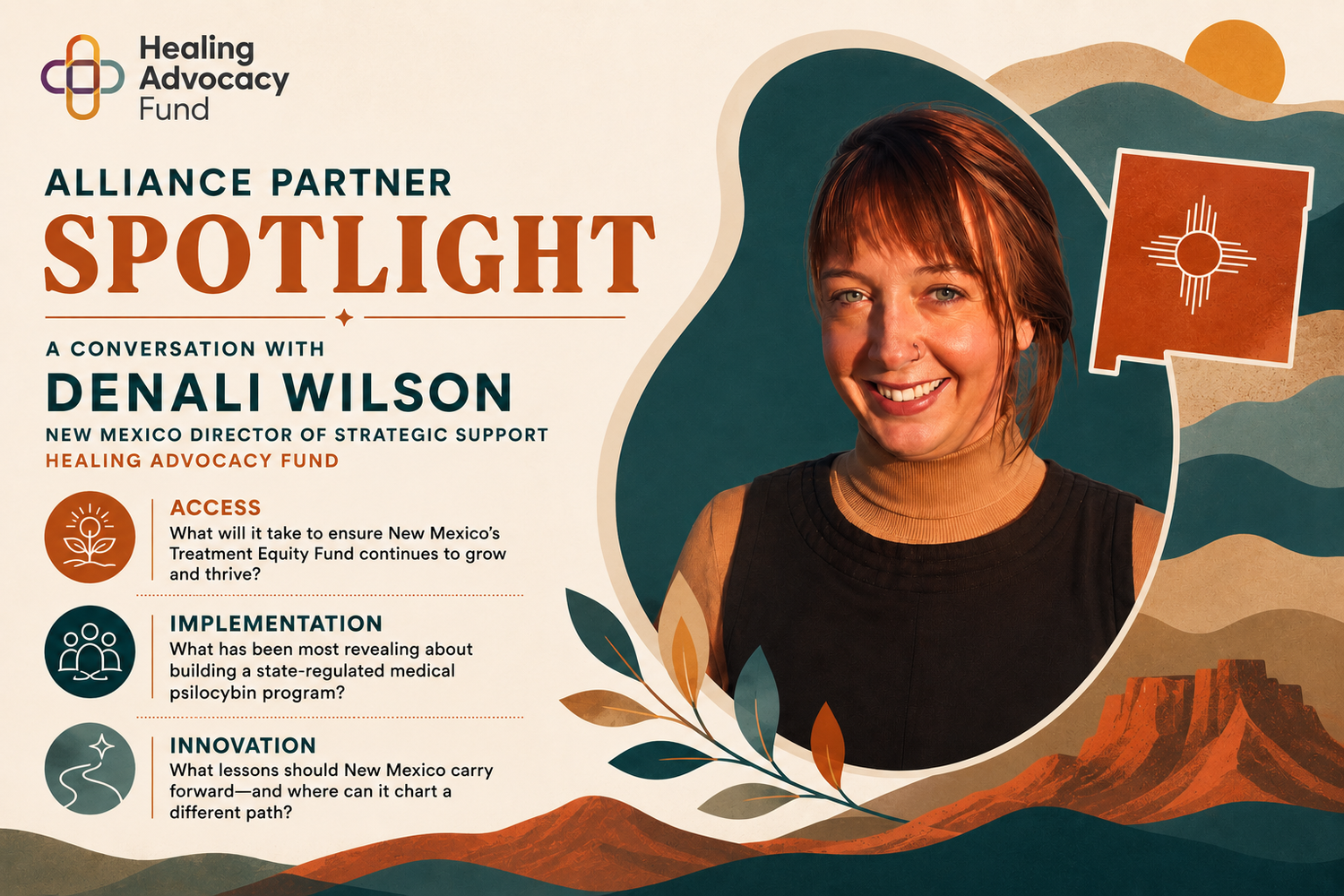
This quarter, we're delighted to spotlight Denali Wilson, New Mexico Director of Strategic Support at the Healing Advocacy Fund and one of our closest collaborators in New Mexico. Based in Las Cruces, Denali is a lawyer and policy advocate focused on building systems that allow for healing from harm,a commitment that has shaped her work at the intersection of policy, implementation, and community engagement.
Over the past year, it has been a privilege to work alongside Denali and the broader Healing Advocacy Fund team as New Mexico builds the nation's first medically integrated psilocybin program. Their partnership has brought thoughtful leadership, strategic insight, and deep care to every stage of the process, helping ensure that access, affordability, and community voice remain central to implementation. We've learned a tremendous amount through this collaboration and are grateful to be on this path together.
We sat down with Denali to reflect on the future of the Treatment Equity Fund, the realities of building a state-regulated medical psilocybin program, and the unique opportunity New Mexico has to chart a new path forward.
Q: SB219 passed in April 2025, and now the real work of implementation is unfolding in real time. One year later, what has been most revealing, unexpected, or illuminating about the process of building a state-regulated medical psilocybin program?
DW: Building a working system is harder than passing a law, and New Mexico is a living example of that truth right now. New Mexico's program development and design is working under an accelerated timeline, which has meant navigating the very real tension between urgency and getting the rules right. Every piece of the system, how patients access care, how providers participate, how producers operate, has to fit together in ways that actually work for the people involved. That kind of coherence doesn't happen without a lot of thought and diligence, and it doesn't always happen fast. I am both surprised by the amount of work that has already been accomplished and anxious about the amount that remains. At Healing Advocacy Fund, we are committed to supporting the program's success, but that commitment means all of us, experts, policymakers and advocates, move at a pace that will allow for success.
Q: You were one of the leading voices advocating for New Mexico's Treatment Equity Fund to receive actual funding this year, a major milestone for access and affordability. What will it take to ensure the fund continues to grow and thrive over time, rather than becoming symbolic policy language?
DW: New Mexico made a historic, bipartisan investment this year: $630,000 directed to the Treatment Equity Fund (which will help low-income New Mexicans access treatment), a real and meaningful step toward equitable access. Sustaining meaningful access through the Fund over time means returning to the legislature year after year, demonstrating how funds were used, making the case for continued need, and keeping the conversation alive with the stakeholders who hold the purse strings. It also means working with the Department of Health to integrate the fund into their annual program budget, so that equity and access are treated as ongoing, core commitments of the program. All of these things require community advocacy, and I'm committed and excited about being a part of those next steps today and in the future.
Q: The Healing Advocacy Fund played a substantial role in advancing psychedelic policy implementation efforts in both Oregon and Colorado. As New Mexico builds the nation's first state-regulated medical psilocybin program, what lessons are most essential to carry forward, and where does New Mexico have an opportunity to chart a different path?
DW: New Mexico may be the third state to launch a regulated psilocybin program, but in many ways it's breaking entirely new ground. It's the first state program created through legislation rather than a ballot initiative, which is a distinction that matters. Building a program through the legislature required a different kind of engagement, one where lawmakers, agency leadership, advocates, and community voices all had to move together. That shared investment has already shaped how the program is taking shape, with strong agency leadership from the start and ongoing lawmaker engagement and involvement in the rulemaking process.
Most significantly, New Mexico is the first state to adopt a medically-integrated model, where participation is tied to qualifying medical conditions and care is delivered by licensed health care personnel. That design choice opens a new door: the possibility of Medicaid and third-party insurance coverage for components of care that are already routinely covered in our behavioral healthcare continuum. This is a key feature of the work our organizations do together, because we know that affordability and accessibility aren't just talking points, they're the whole point.
Getting this part right in New Mexico won't be simple, but the model offers a real pathway to making psilocybin therapy available to the people who need it most, not just those who can afford it. This is something for us to feel both proud and excited about.